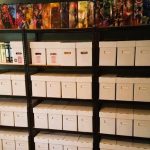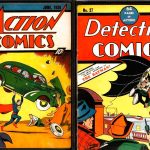
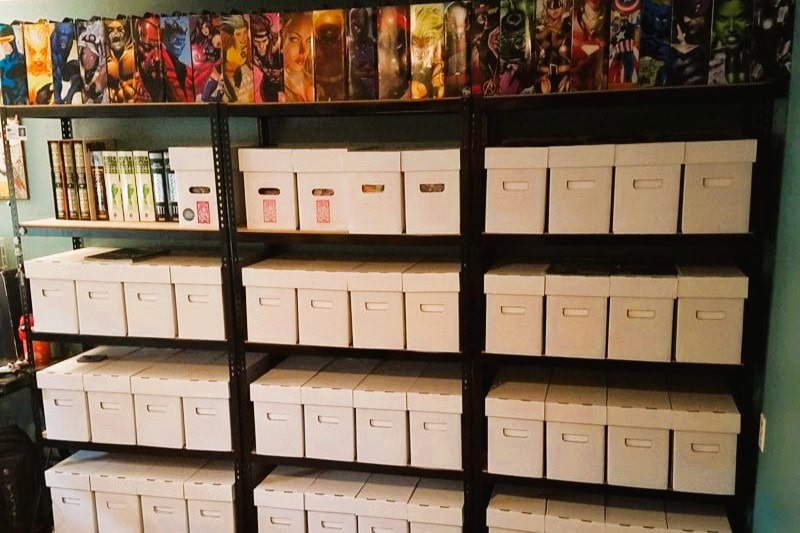
Comic books can develop faded covers, bent corners, brittle pages, rusted staples, and moisture damage when storage conditions work against the paper. Learning how to store comics without damaging a collection gives collectors a practical way to protect reading copies, valuable keys, and graded issues for years. Proper comic book storage involves bags, backing boards, boxes, temperature control, humidity monitoring, careful handling, shelving, and scheduled inspections. A few preventive choices can stop problems that become difficult or expensive to correct later.
- Protect paper from heat and moisture.
- Reduce exposure to damaging light.
- Support covers, corners, and spines.
- Inspect stored collections periodically.
Comic Book Storage Basics
Collectors often discover that storage damage develops gradually, which makes prevention much easier than restoration. A collection kept for years inside a garage may eventually show warped pages, rusty staples, or musty odors even when every issue was bagged and boarded, because the surrounding environment still affects comic books. The Library of Congress comic preservation guidance explains that many comic books were printed on acidic wood-pulp paper and recommends controlled conditions, limited light, and supportive enclosures. Storage materials work best when the room itself is also suitable for paper preservation.
- Choose a temperature-controlled interior room.
- Keep boxes away from plumbing lines.
- Use enclosures that support each issue.
- Keep food and drinks out of storage areas.
- Check conditions during seasonal changes.
Choose Comic Bags
Protective sleeves create the first barrier between comic books and fingerprints, dust, abrasion, and repeated handling. Polyethylene and polypropylene bags are common choices for collections that are opened regularly, while polyester film such as Mylar is frequently selected for long-term storage of higher-value issues. The Library of Congress recognizes polyester film sleeves as a preservation enclosure, though brittle paper should still be handled carefully because static can place stress on weakened pages. Collectors should also replace any bag that becomes torn, distorted, cloudy, or contaminated.
- Match sleeve dimensions to the comic.
- Replace damaged or cloudy bags.
- Keep sealing tape away from covers.
- Handle fragile books with extra support.
Use Backing Boards
Backing boards help comic books resist bends, corner folds, and spine stress when they are moved or stored upright. Collectors should choose acid-free or lignin-free materials rather than ordinary cardboard, which may introduce unwanted acids beside the paper during extended storage. Library of Congress preservation guidance recommends supportive enclosures made from suitable preservation materials, including neutral-pH boxes and acid-free folders. A board should slide comfortably into the bag without forcing pressure against the comic.
- Pair boards with the correct bag size.
- Discard boards that become warped.
- Avoid squeezing thick issues into narrow sleeves.
- Check older boards for discoloration.
Match Comic Sizes
Comic books from different publishing eras do not all share the same dimensions. Golden Age, Silver Age, Bronze Age, and Current Age issues can require different bags and boards, and forcing an older comic into a modern sleeve may crush corners or create unwanted pressure along the spine. Annuals, treasury editions, magazines, and thick special issues may require separate storage products because their measurements differ from standard comics. Measuring unfamiliar books before ordering supplies prevents unnecessary handling damage.
- Use Current Age supplies for matching books.
- Allow extra width for many Silver Age comics.
- Choose larger sleeves for Golden Age issues.
- House oversized formats separately.
Choose Comic Boxes
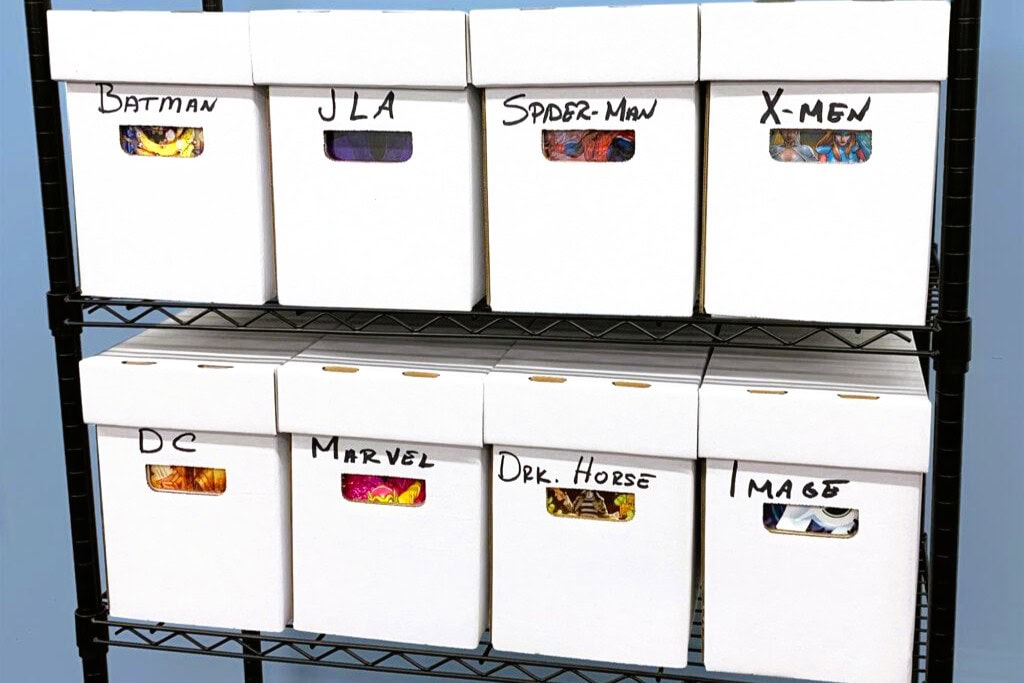
Short boxes and long boxes can both protect comic books when the books stay upright and supported without being compressed. Short boxes are easier to lift and reposition, while long boxes hold more issues but can become difficult to move once filled, especially when stored on upper shelves. Collectors should leave enough space to remove one issue without dragging neighboring covers against each other, yet not so much room that the books slump sideways. Dividers or archival fillers can support partially filled rows.
- Leave enough room to browse safely.
- Add dividers to unfinished rows.
- Avoid packing books under constant pressure.
- Replace boxes with crushed corners or weak bottoms.
- Place identification labels on the box exterior.
Control Storage Temperature
Heat accelerates chemical deterioration in paper, so room temperature matters even when comic books are protected by bags and boxes. The Library of Congress book storage guide recommends temperatures of 70 degrees Fahrenheit or below and advises against attics, garages, radiators, heating vents, and areas exposed to repeated temperature swings. An interior room with stable air conditioning usually provides a safer environment than an unfinished storage space. Collectors should also avoid placing boxes against exterior walls that become hot during part of the day.
- Avoid overheated attics.
- Skip garages without climate control.
- Keep boxes away from vents and radiators.
- Favor rooms with steady indoor temperatures.
Manage Comic Humidity
Moisture can warp comic books, promote mold, stain paper, and contribute to corrosion around staples. The Library of Congress recommends about 35% relative humidity specifically for comic collections, while broader book-care guidance describes 30% to 55% as a safe range for many books. A digital hygrometer gives collectors an inexpensive way to track moisture levels instead of relying on how the room feels. Sudden changes deserve attention because a leaking pipe, failing air conditioner, or damp wall can alter conditions before visible damage appears.
- Monitor relative humidity with a hygrometer.
- Watch readings during seasonal weather changes.
- Investigate musty odors promptly.
- Never seal damp comics inside plastic.
- Correct moisture sources before returning boxes.
Avoid Direct Sunlight
Light exposure can fade inks, weaken paper, and change cover colors even when comic books sit behind clear plastic. Library of Congress preservation specialists recommend minimal light exposure and avoiding direct or intense illumination for comic collections. Displayed issues need more protection than boxed copies because windows, lamps, and display lighting can affect them every day. Rotating display copies and using UV-filtering materials can reduce cumulative exposure.
- Keep storage boxes away from windows.
- Limit how long valuable comics remain displayed.
- Consider UV-filtering display materials.
- Move framed books away from direct sun.
Store Boxes Safely
Comic boxes should sit on shelves rather than directly on concrete, carpet, or basement floors where water may reach them first. The Library of Congress storage guidance advises avoiding areas with elevated flood or leak risks and warns that plastic bins cannot compensate for damaging environmental conditions. Shelving should support the combined weight of filled boxes without bending or leaning, and collectors should avoid stacking boxes so high that lower containers become crushed. Leaving some space around shelving also makes leaks, insects, and wall damage easier to notice.
- Raise collections several inches above floor level.
- Use shelving rated for substantial weight.
- Avoid unstable stacks of boxes.
- Leave access for inspections.
- Keep boxes away from water heaters.
Handle Comics Carefully
Clean, dry hands and a clear table reduce many forms of handling damage. The Library of Congress advises keeping food and drinks away from comic books and avoiding paper clips, rubber bands, glue, tape, and folded covers. Collectors should support the entire issue while reading rather than lifting it from one corner, and brittle vintage books should never be forced open flat. Valuable raw comics can also benefit from being placed on a clean backing surface whenever they are removed from their sleeves.
- Wash and dry hands before handling comics.
- Support the entire book while moving it.
- Keep drinks away from the work surface.
- Never attach tape directly to paper.
- Avoid forcing old spines open.
Protect Graded Comics
Encapsulation protects graded comic books from fingerprints and routine handling, but the plastic holder does not eliminate environmental risks. CGC recommends keeping certified comics in a dark, dry, cool, temperature-controlled setting while limiting exposure to humidity, heat, vibration, and light. CGC also states that its holder is not airtight, which allows gases released by aging paper to escape instead of remaining trapped inside. Slabs should stay supported upright and should not have heavy objects placed across them.
- Store slabs in a controlled indoor environment.
- Shield cases from direct sunlight.
- Avoid areas exposed to repeated vibration.
- Inspect holders for cracks or separation.
Prevent Water Damage
Water can stain pages, swell paper fibers, cause sheets to stick together, and create conditions where mold develops. The Library of Congress storage FAQ warns that plastic containers used in humid locations can trap moisture, so a sealed tub should not replace proper room conditions. Collectors who discover wet comic books should move unaffected books away from the source and correct the leak before returning anything to storage. Books with severe water exposure may require professional conservation rather than home drying attempts.
- Keep boxes off basement and garage floors.
- Inspect nearby roofs and plumbing.
- Do not trap moisture inside sealed containers.
- Separate wet books from dry issues.
- Seek conservation help for major damage.
Watch For Pests
Dust, crumbs, cardboard, and moisture can make storage spaces attractive to insects and rodents. Library of Congress guidance recommends regular housekeeping because dust can absorb moisture, discolor collection materials, and attract pests. Collectors should inspect shelves, corners, boxes, and the floor for droppings, insect debris, gnaw marks, or damaged paper. Pesticides should never be sprayed directly on comic books or storage materials.
- Keep storage rooms free of food.
- Inspect boxes for insect activity.
- Clean shelves before dust accumulates.
- Check corners and wall edges for pests.
Avoid Storage Mistakes
Collectors can accidentally damage comic books while trying to protect them, especially when issues are packed too tightly, placed in undersized bags, or stored beneath excessive weight. Rubber bands can leave dents or cut into edges, adhesive tape can stain covers, and tall stacks place pressure on books near the bottom. Improvised storage materials may also contain acids or coatings that were never intended for paper preservation. Choosing purpose-made supplies reduces those risks.
- Never wrap comics with rubber bands.
- Avoid tall stacks of unprotected books.
- Keep adhesive labels off covers.
- Do not force comics into undersized sleeves.
- Keep collections away from heaters.
Inspect Comic Collections
Routine inspections help collectors catch storage problems before one damaged book turns into an affected box. A useful inspection includes checking bags for cloudiness, boards for warping, staples for rust, pages for rippling, boxes for moisture stains, and shelves for pest activity. Collectors can also record temperature and humidity during these checks and compare readings across the year. Updating inventory photographs at the same time creates a useful record for valuable comic books.
- Check protective bags for deterioration.
- Look for page waviness or discoloration.
- Inspect staples for early corrosion.
- Record condition changes.
- Update photographs of valuable issues.
Long Term Storage
Long-term preservation works best when several forms of protection support each other. Comic books benefit from suitable bags, backing boards, sturdy boxes, climate control, low light exposure, careful handling, raised shelving, and recurring inspections, while expensive supplies cannot make a damp basement safe. The Library of Congress describes preventive storage and handling as among the most effective and economical approaches to protecting paper collections. Collectors planning to keep books for decades should treat the storage room as part of the preservation system, not merely the place where boxes happen to sit.
- Prioritize environmental control.
- Use suitable archival materials.
- Support every issue properly.
- Review conditions throughout the year.
- Maintain records for higher-value books.
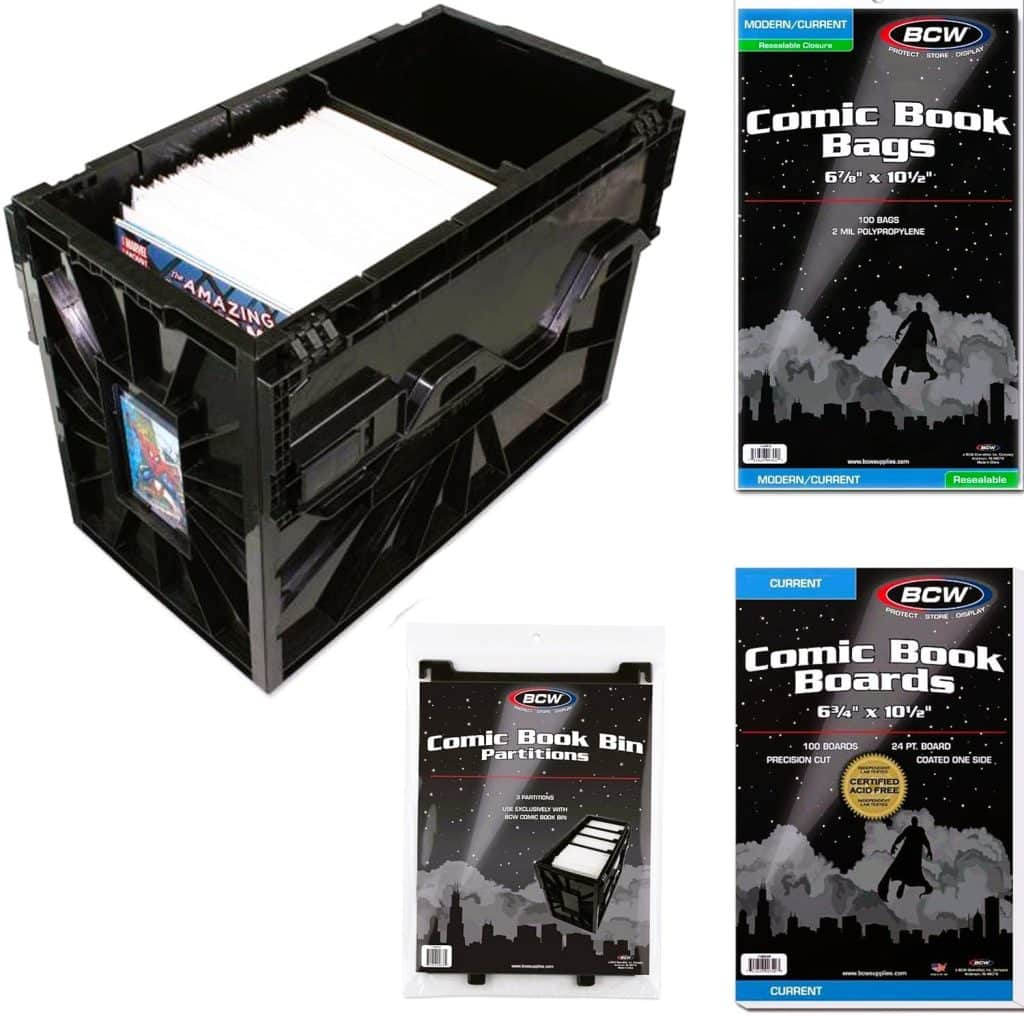
Comic Storage Key Takeaways
Protecting comic books depends less on one expensive container and more on controlling several sources of damage at once. Bags and boards reduce handling wear, boxes support the books, controlled temperature and humidity slow deterioration, and raised shelving limits exposure to minor flooding, while routine inspections reveal problems before they spread. Collectors who combine these practices create a storage system that works for reading copies, vintage keys, raw books, and graded issues while making the collection easier to organize and inspect.
- Keep comic books cool and dry.
- Limit exposure to sunlight.
- Use supplies that match each book’s dimensions.
- Store boxes above floor level.
- Inspect the collection on a regular schedule.
FAQs
Should Comics Lay Flat?
A few comic books can lie flat when fully supported, but large stacks create pressure and make lower books difficult to remove. Upright storage with dividers works better for most boxed collections.
How Often Replace Bags?
Comic bags should be replaced when they become cloudy, brittle, torn, or distorted. Mylar and similar polyester sleeves may last much longer when kept under suitable storage conditions.
Can Comics Use Plastic?
Yes, when the plastic is intended for collection storage. Polyester, polyethylene, and polypropylene are commonly used, while unknown household plastics are better avoided.
Are Attics Safe?
Most attics are poor places for comic books because heat and humidity can fluctuate throughout the year. A temperature-controlled interior room provides more dependable conditions.
Can Comics Get Mold?
Yes. Excess moisture and high humidity can cause mold, so affected comic books should be isolated and the moisture source corrected before they return to storage.